At every stop, collection crews and waste management staff work behind and around the refuse collection vehicle. They step off the vehicle, move bins, and work in immediate proximity to motorists, cyclists, pedestrians, and other road users.
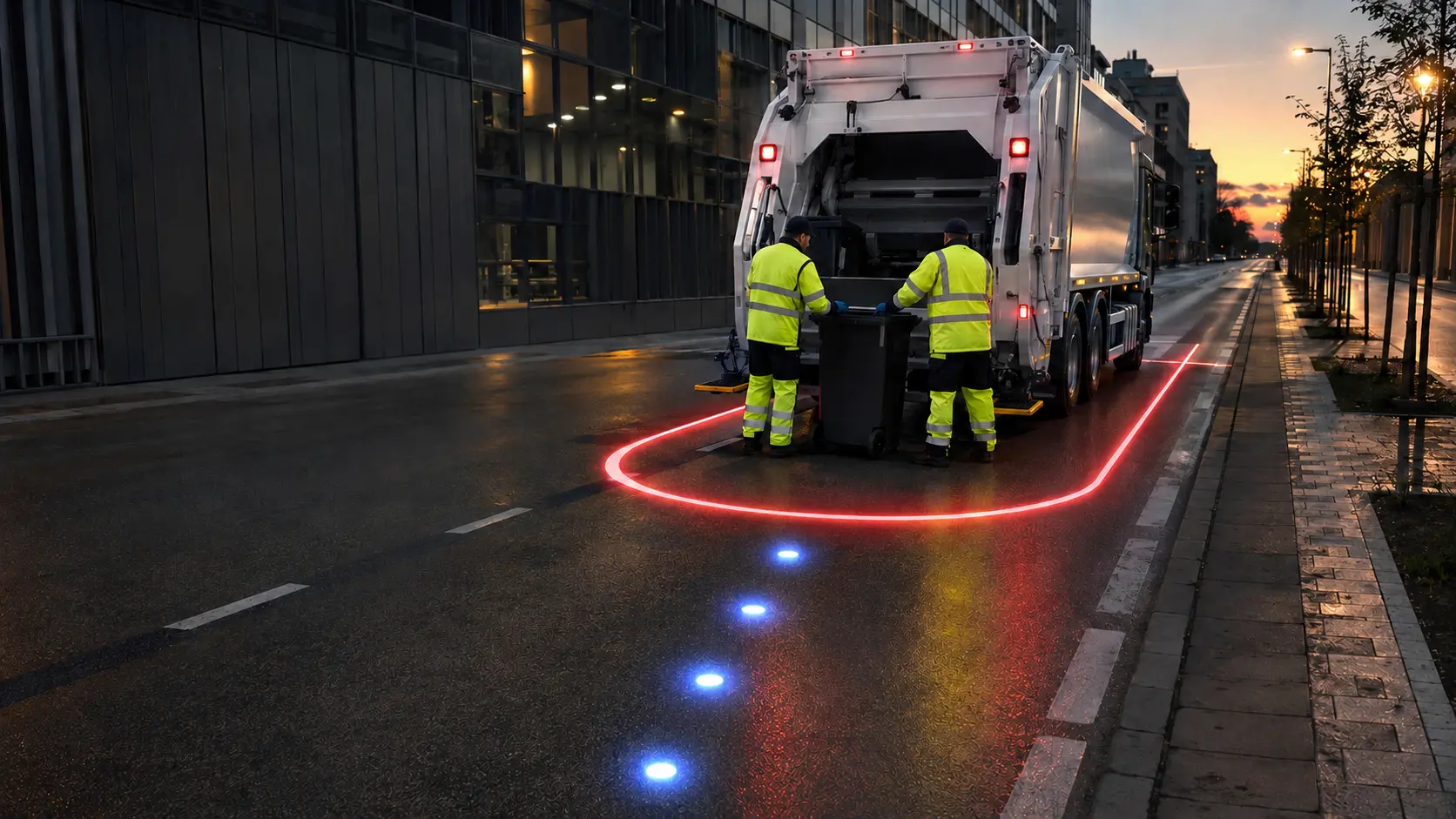
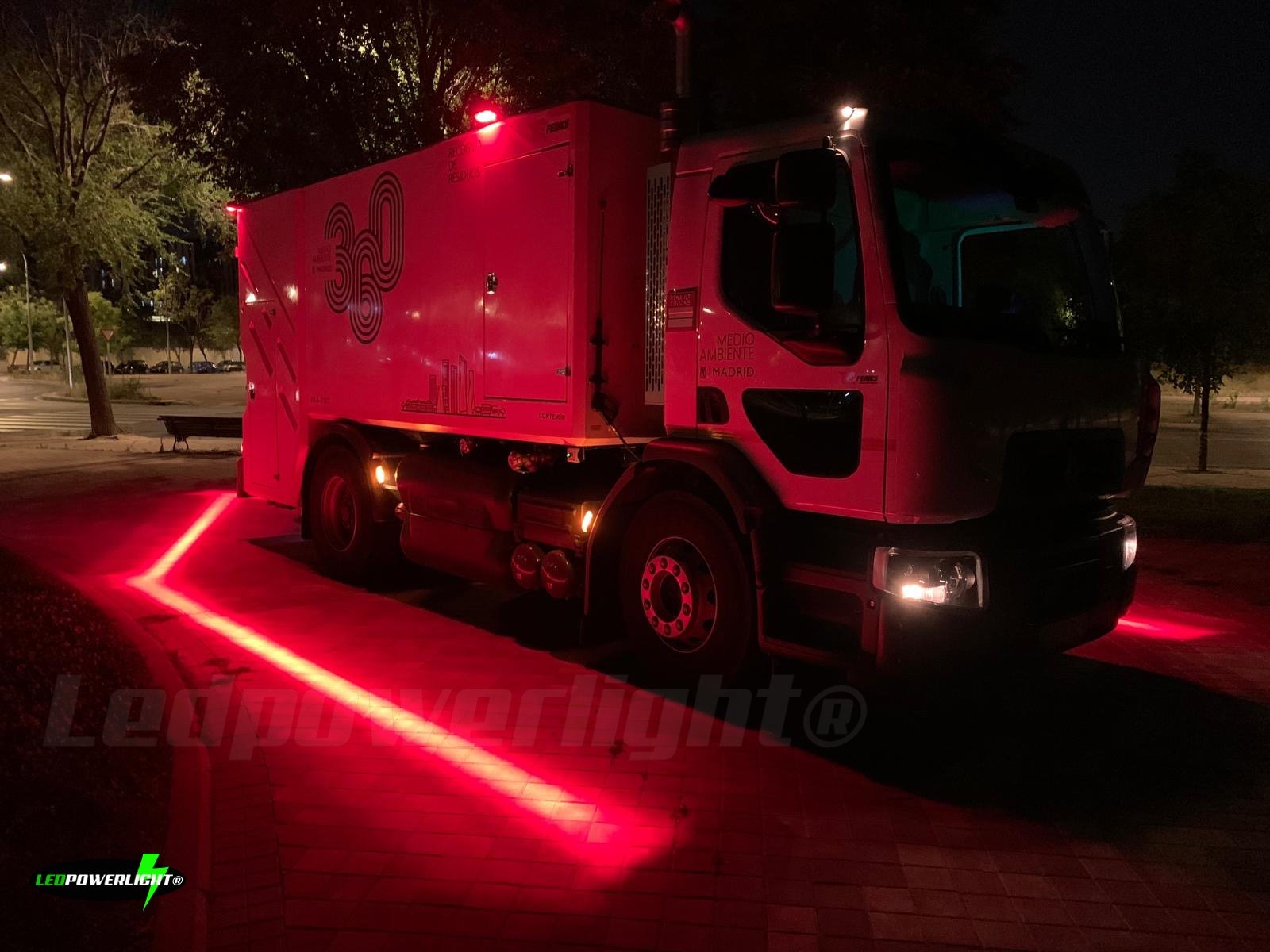
To enhance their visibility, LEDPOWERLIGHT® offers a safety lighting solution projected onto the ground. A red light halo marks the work area behind the RCV, while two side light lines extend this boundary on either side of the vehicle.
This ground-based light signaling serves as a supplementary safety aid. It does not replace regulatory equipment, high-visibility clothing, collection procedures, or the vehicle's existing signaling.
A collection route involves constant stops, stepping off the footboard, moving containers, and restarting. Crew members work in a mobile environment, sometimes at night or in low-visibility conditions, in direct contact with traffic.
The INRS identifies vehicle maneuvers and reversing, being struck by vehicles on public roads, and vehicle collisions as key road risks in waste collection. Securing the rear of collection vehicles must therefore combine organization, vigilance, personal protective equipment, and appropriate warning devices.
Key figures — 2024 data
In the French non-hazardous waste collection sector, 2,124 workplace accidents were recorded for 41,232 employees, representing 51.5 accidents per 1,000 employees, compared to the national average of 26.4 across all sectors. These figures cover all accidents in the sector, not just those occurring behind RCVs.
Sources: INRS — Waste collection: occupational risks; 2024 Health Insurance data cited by Travail-Industrie
The principle involves projecting a clear, continuous safety zone on the ground around the rear of the refuse collection vehicle. This luminous boundary catches the eye and helps road users approaching the truck better perceive the space where collection crews are working.
The light halo is not a physical barrier and does not replace the need for vigilance. It provides an additional visual cue, placed directly on the road surface where the work is taking place.
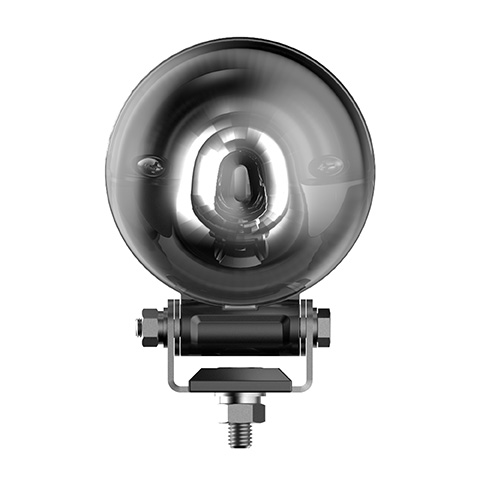
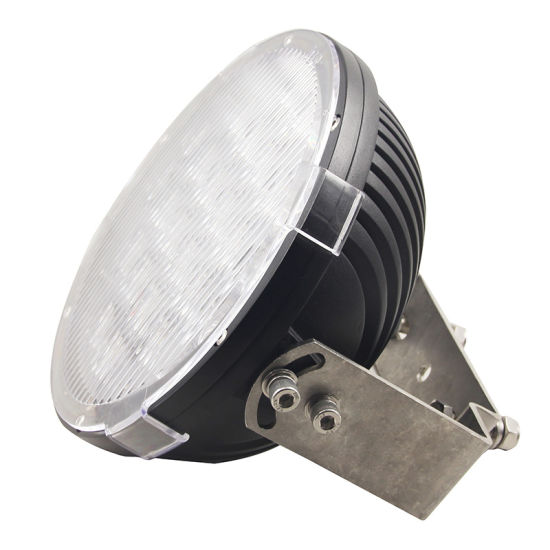
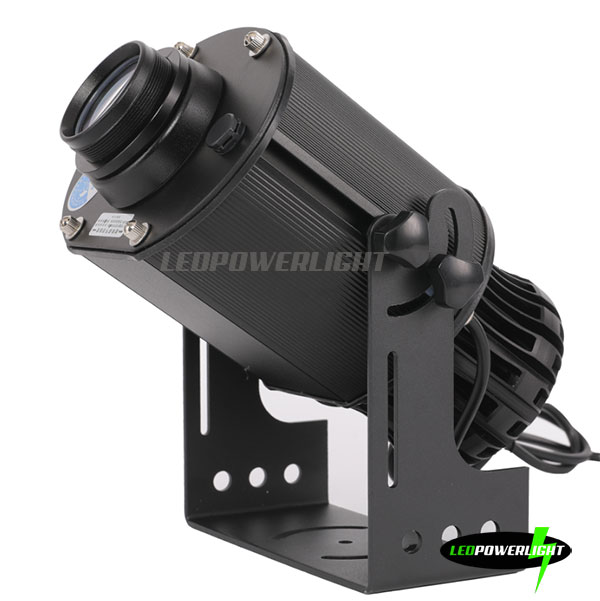
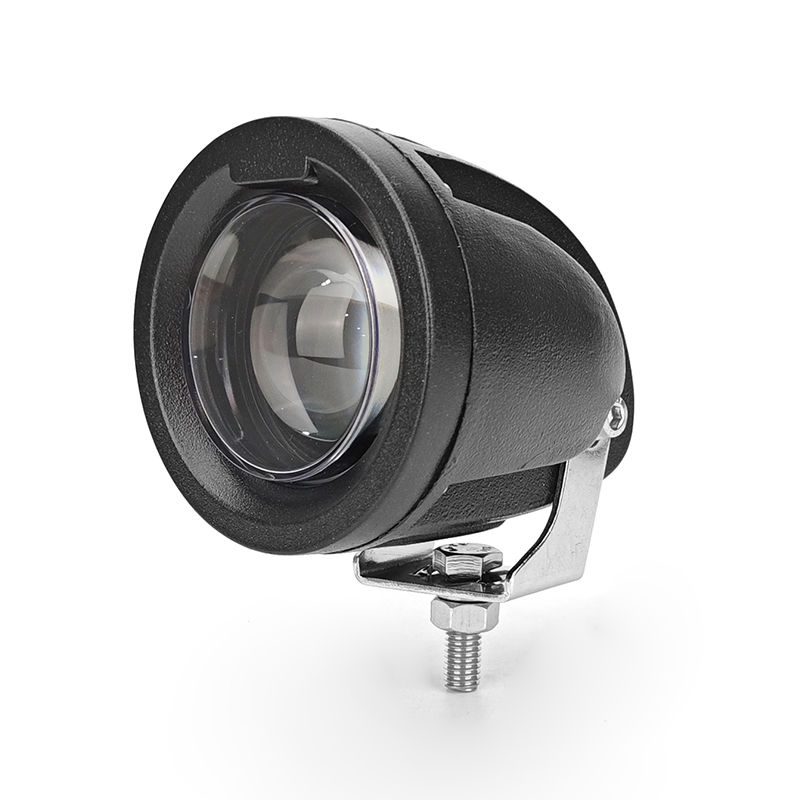
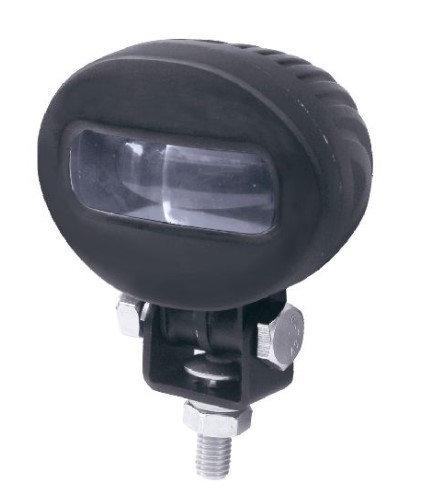
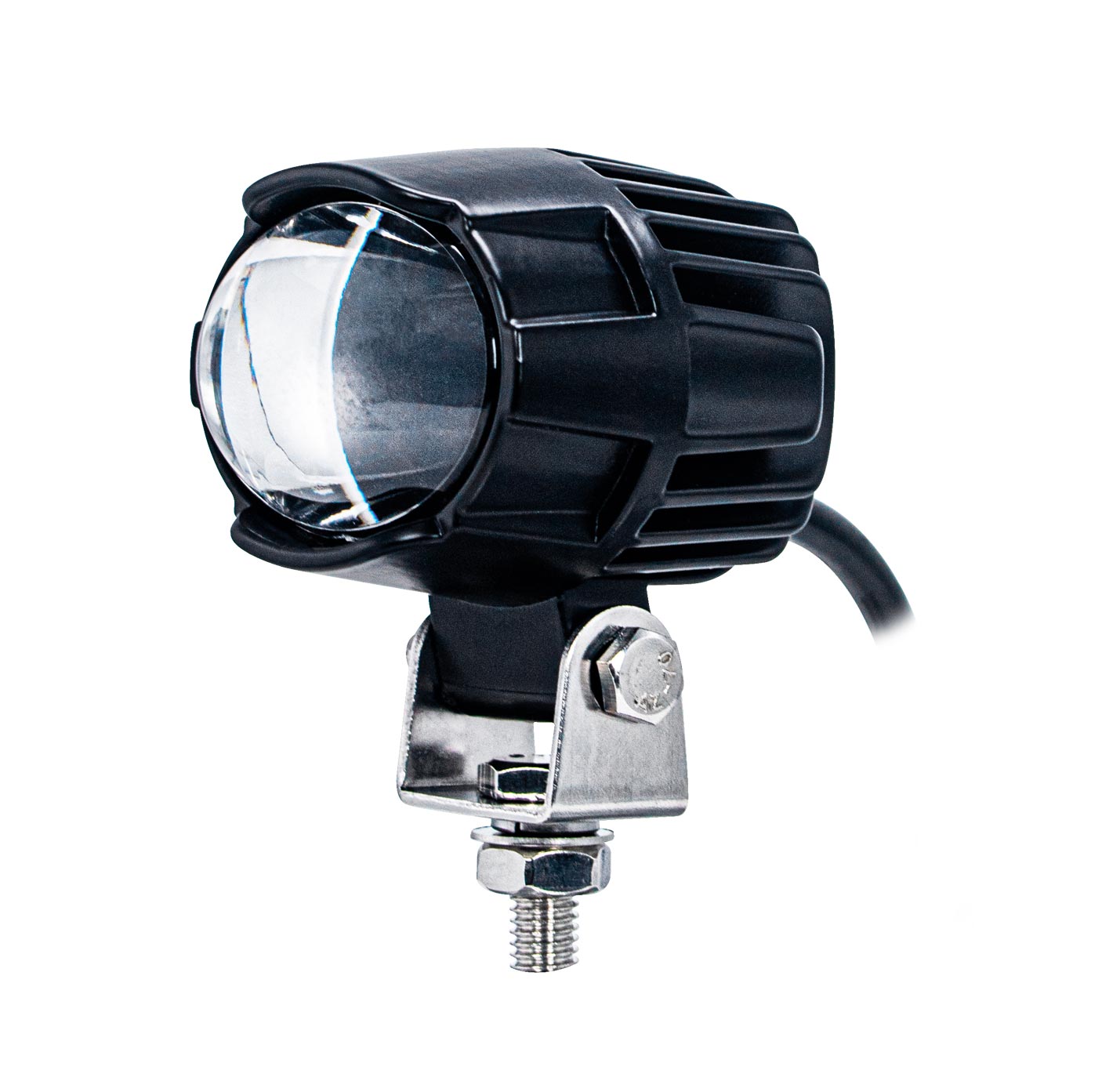
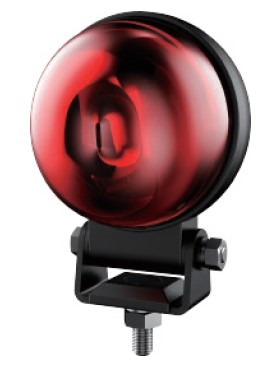
Installed in the center of the rear of the refuse collection vehicle, the LED ARC Spot projects a red arc onto the ground. This marks the rear boundary of the work zone and creates the main light halo.
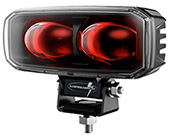
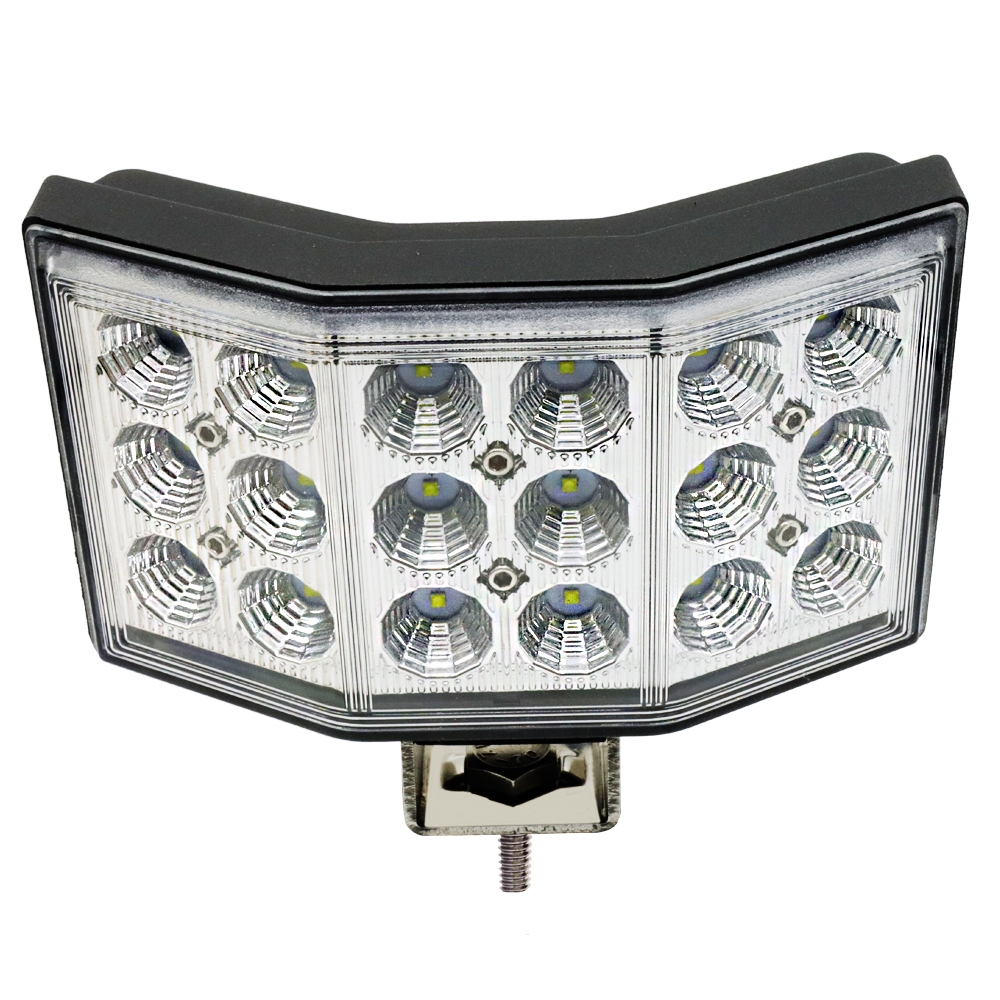
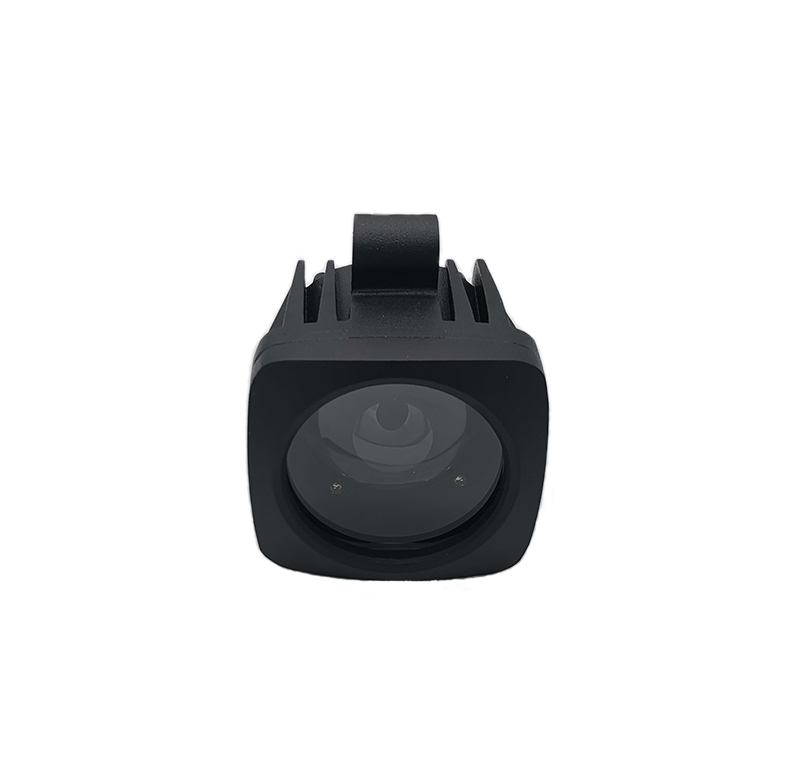
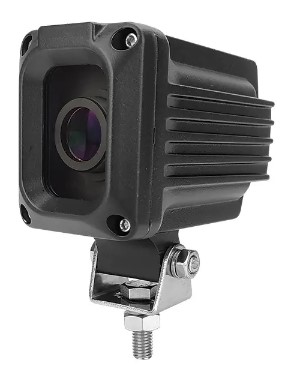
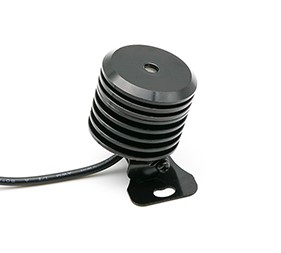
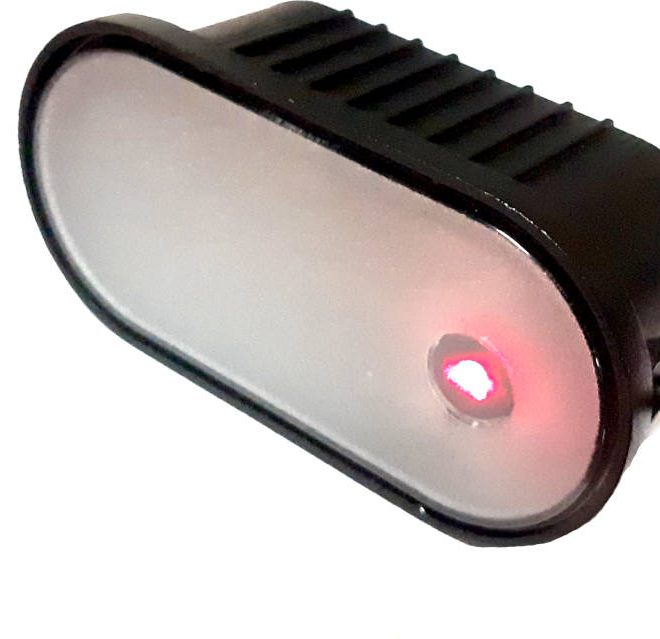
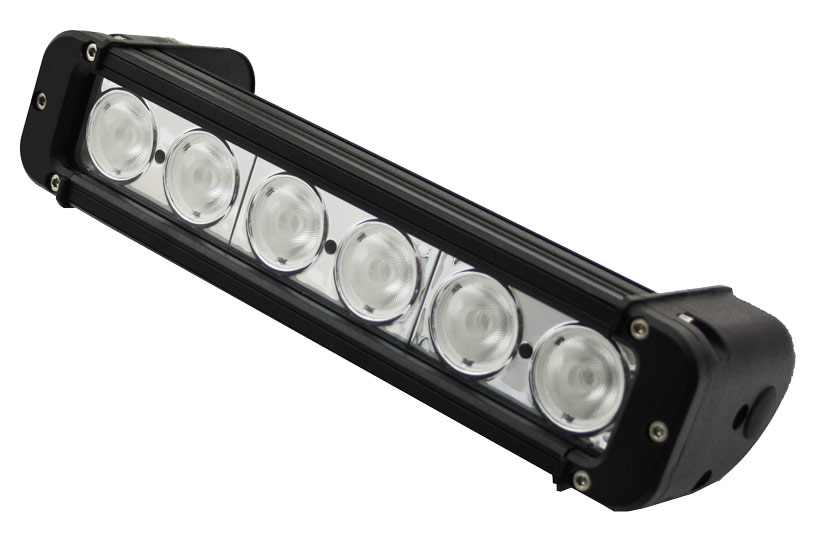
A Red Line Visio® is installed on each side of the vehicle. The two red lines are adjusted to match the color and visual thickness of the arc. They connect to its ends to form a continuous luminous boundary around the rear of the vehicle.
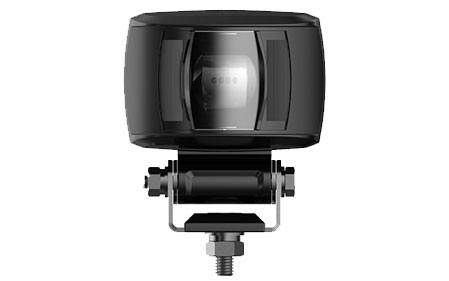
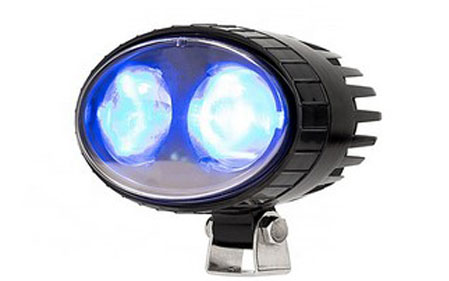
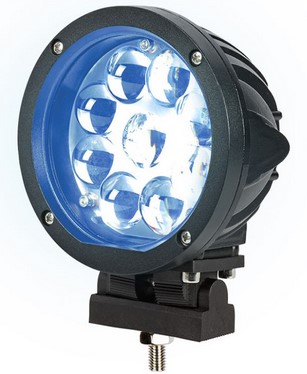
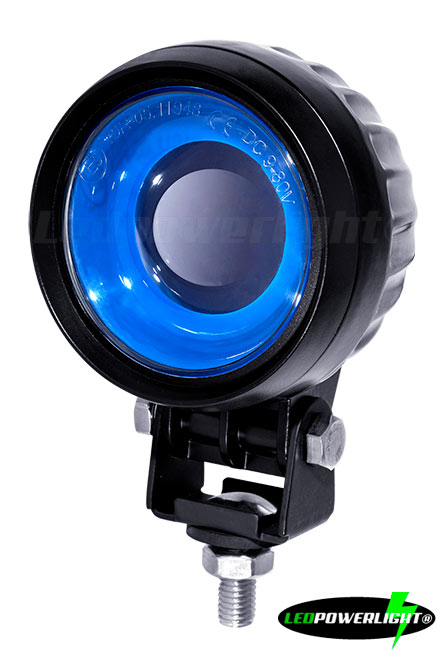
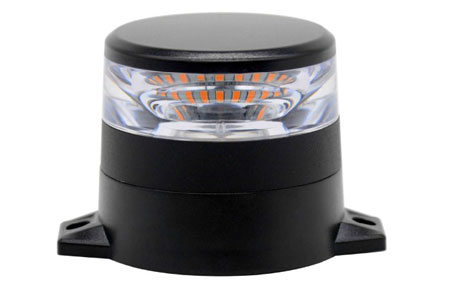
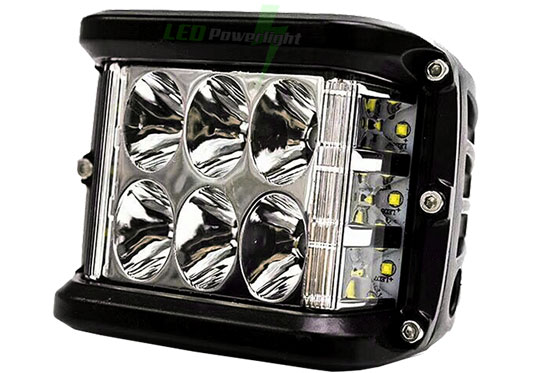
As an option, a Sequential Blue Spot placed at the rear projects four light points beyond the red arc. Three of these points light up in sequence, creating a dynamic signal designed to grab the attention of road users approaching from behind the vehicle.
Configuration to be validated
The position, color, activation, and use of the Sequential Blue Spot must be validated based on the vehicle, the operating environment, and applicable regulations. This complete solution is intended to complement, not replace, the regulatory signaling on the refuse collection vehicle.
LEDPOWERLIGHT® positions its solutions at a high level of quality: selection of LEDs and components, mastery of heat dissipation, sharpness and width of projection, adjustment options, and reliability in demanding professional environments.
The perception of any light projection depends on ambient light, the nature of the ground, weather conditions, mounting height, and settings. Validation on the vehicle and in its actual operating conditions is recommended.
For over 10 years, LEDPOWERLIGHT® has been working on signaling and safety lighting projected onto the ground. The company has extensive experience with refuse collection vehicles and the protection of sanitation workers, notably on collection vehicles operated in Monaco as well as with other major players in France and Europe.
This field expertise allows us to study each installation by taking into account the vehicle, mounting height, desired projection width, and the operating environment.
The safety of sanitation workers relies on a coherent set of measures: route organization, training, adherence to procedures, high-visibility clothing, equipment checks, regulatory vehicle signaling, and the vigilance of all personnel involved.
LEDPOWERLIGHT® safety lighting solutions provide a visual reference on the ground. They do not replace any mandatory equipment and do not, by themselves, guarantee the prevention of accidents.
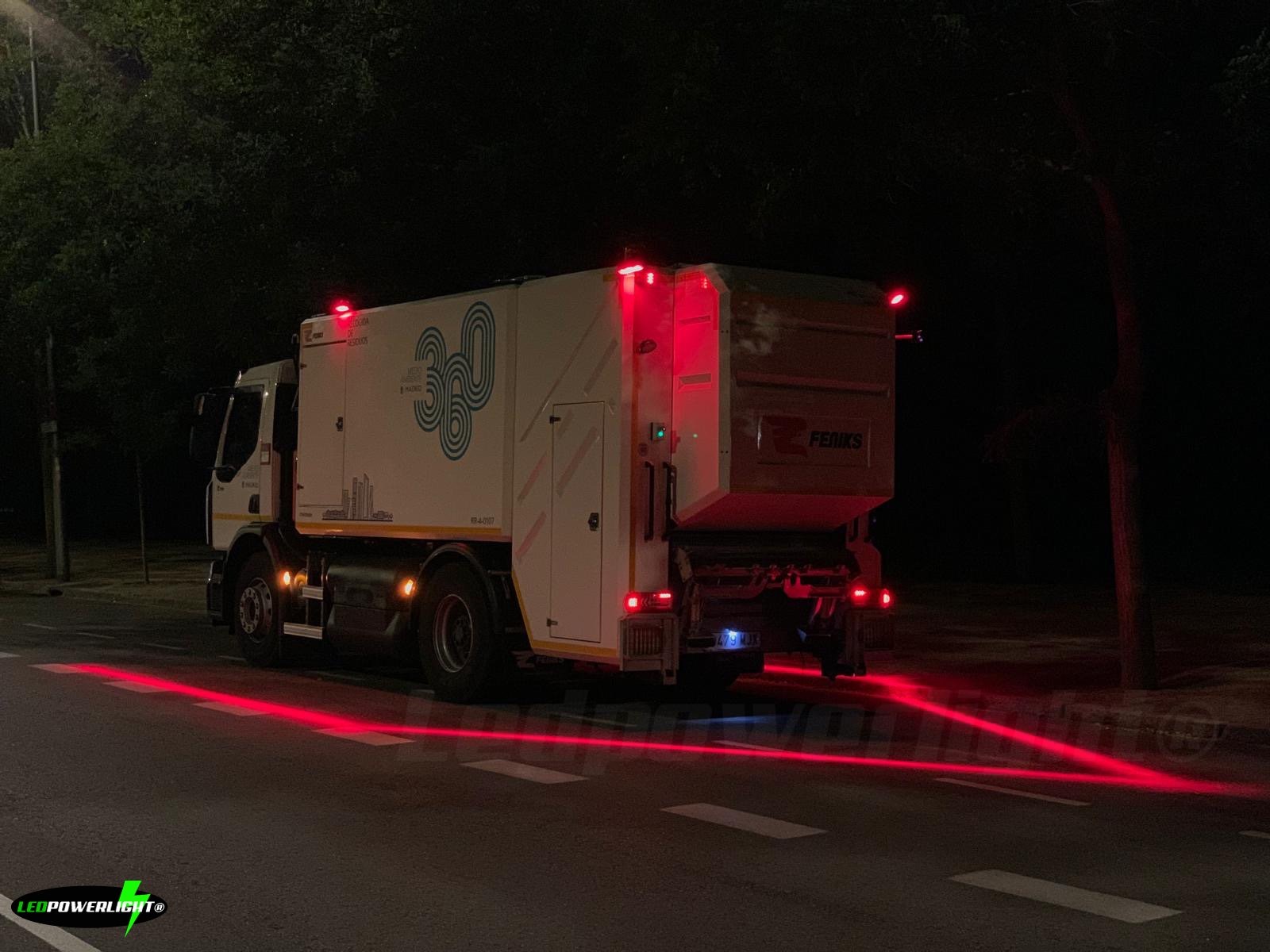
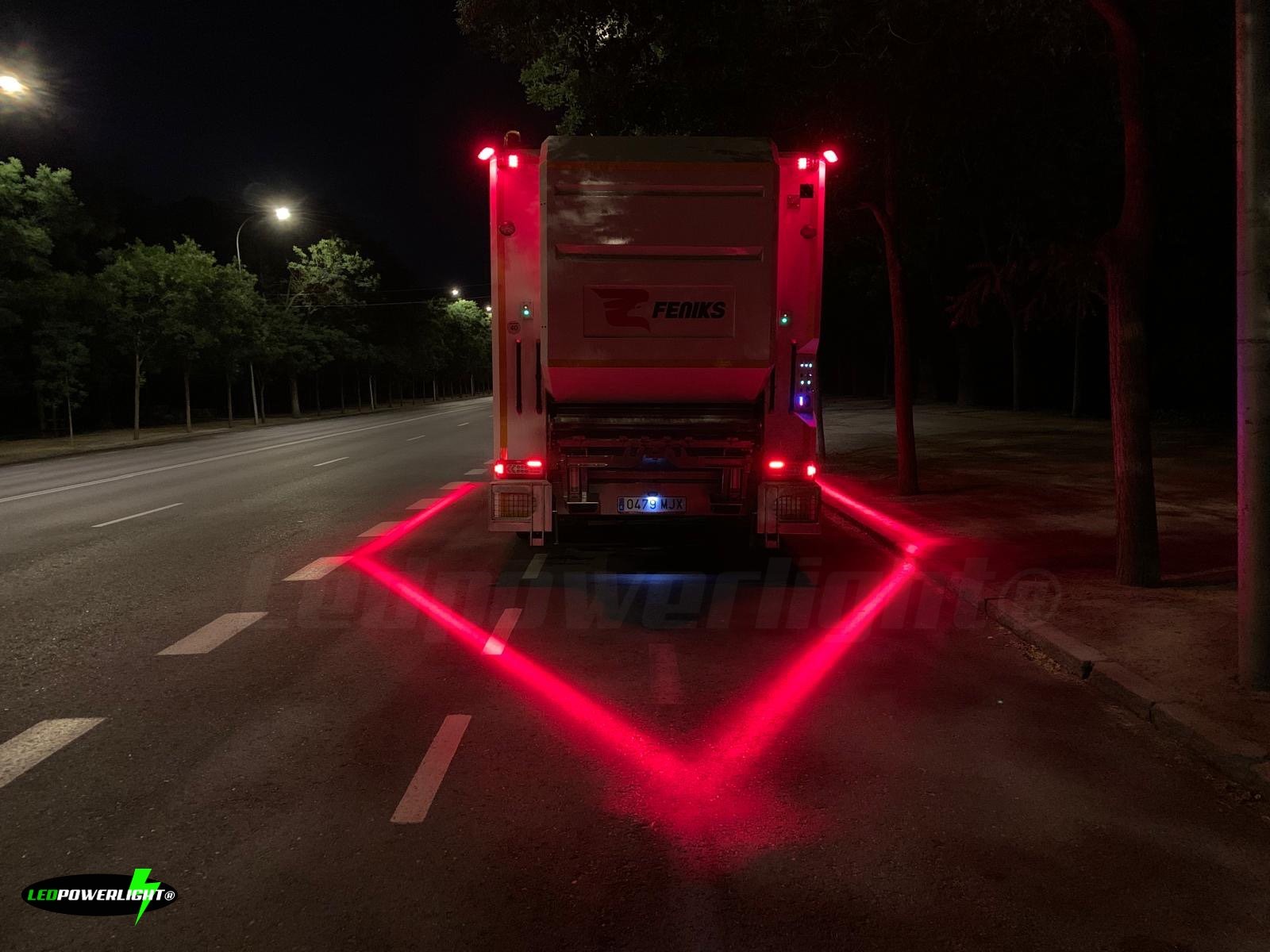
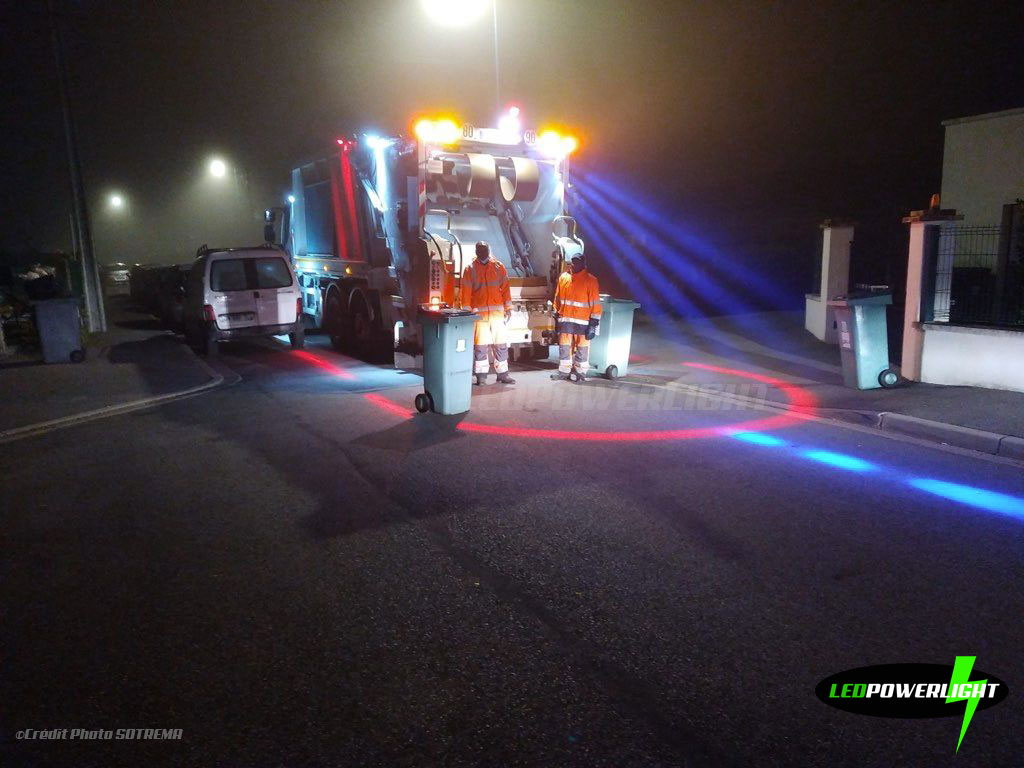
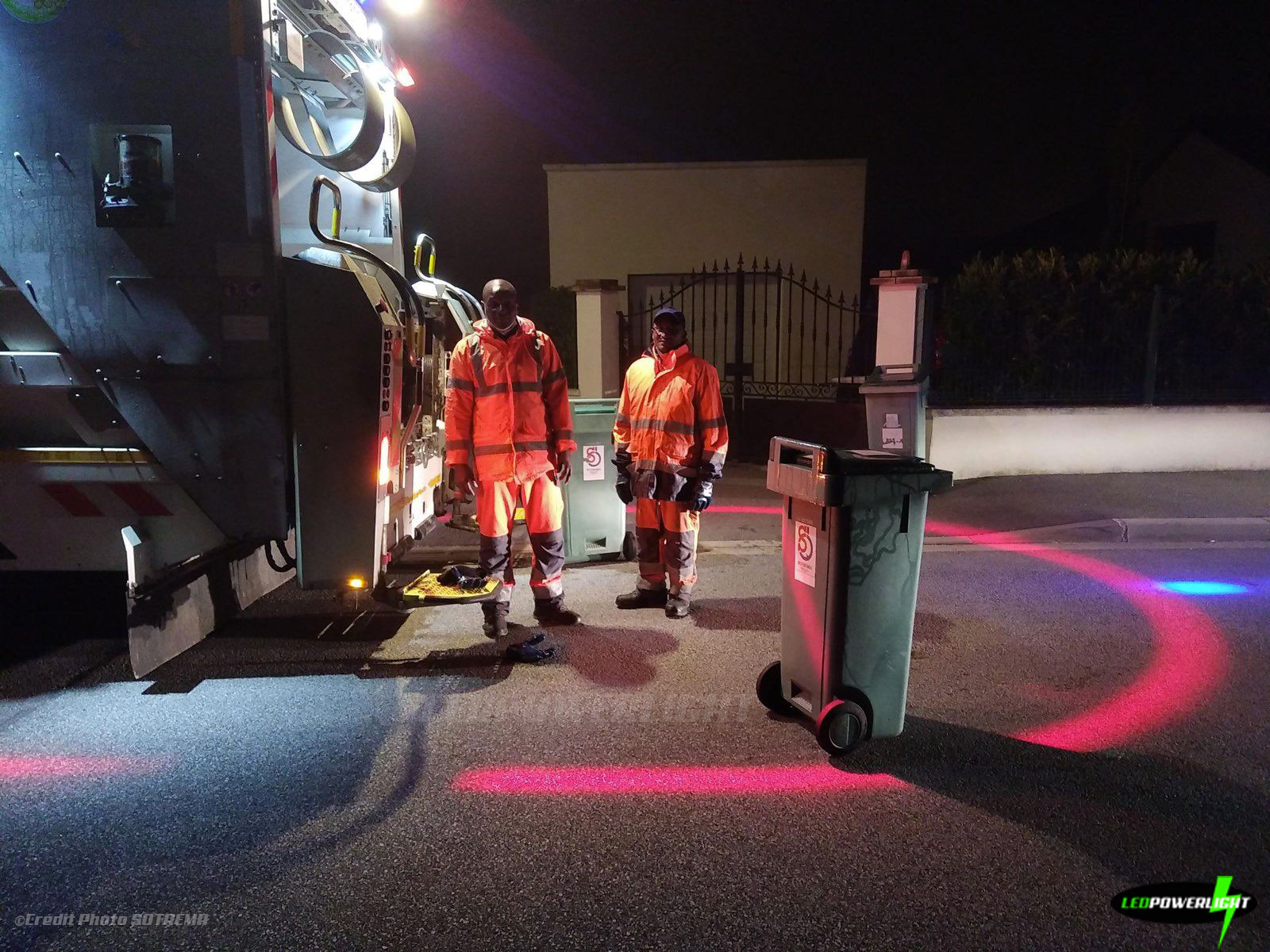
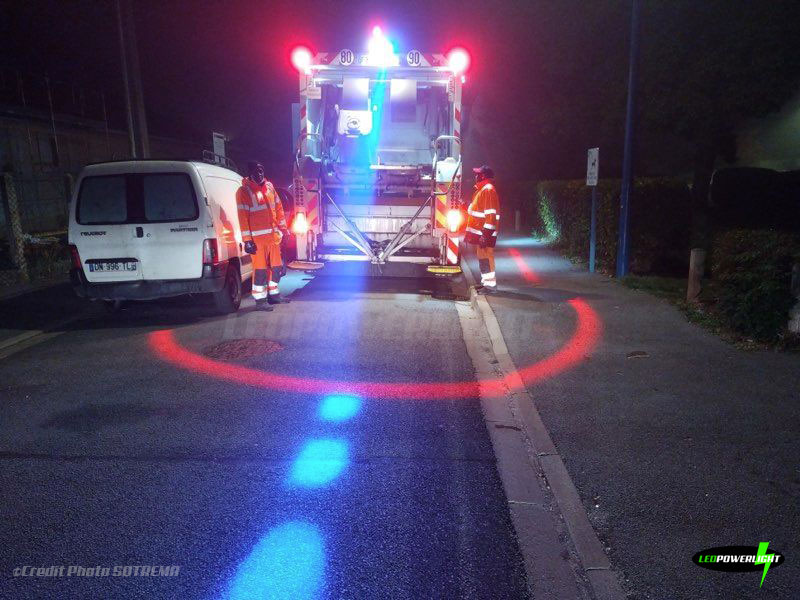
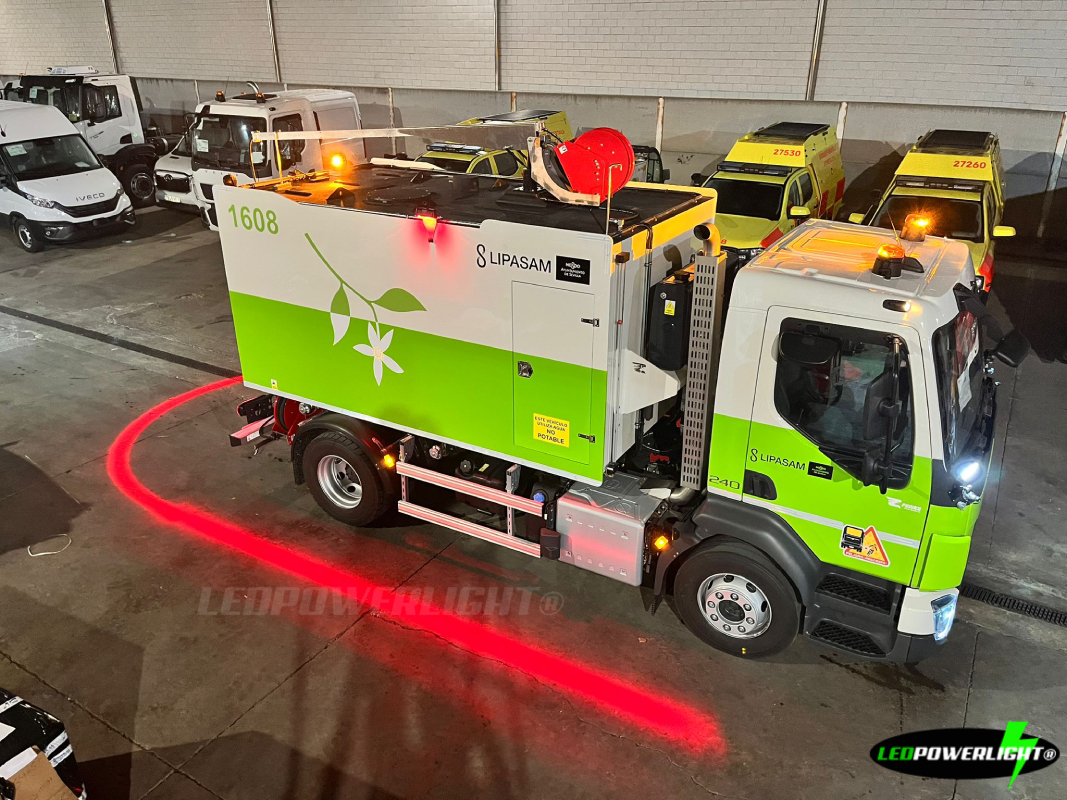
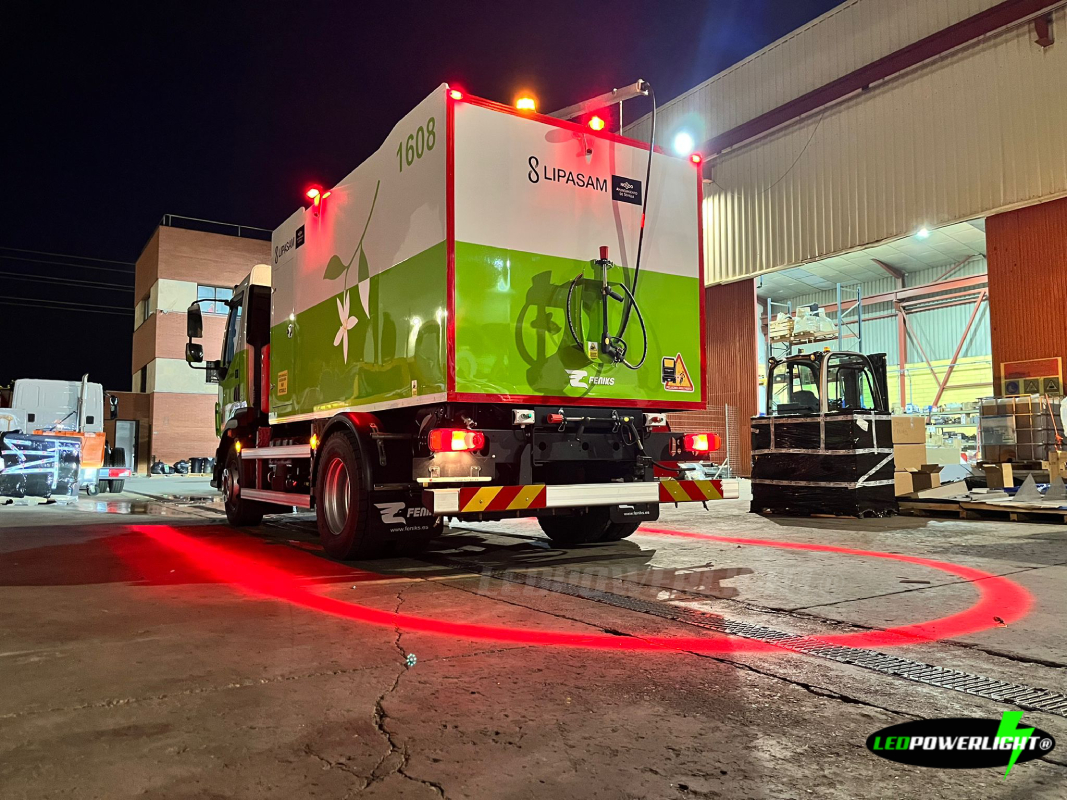
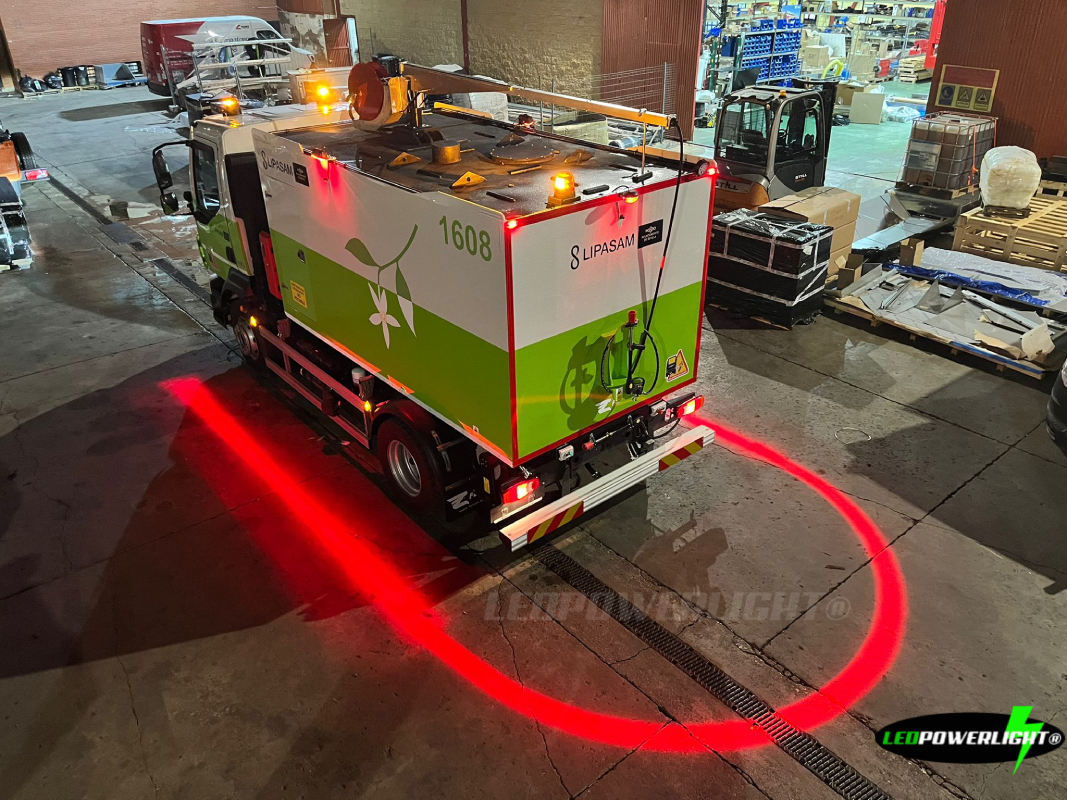
It is a space made visually identifiable around the collection crew's work area. In this configuration, a red arc and two side red lines create a continuous luminous boundary on the ground behind the refuse collection vehicle. This boundary serves as a complementary visual reference, not a physical barrier.
The arc primarily marks the rear limit. The two side lines ensure visual continuity along the sides near the RCV, making the work area easier to perceive as a whole.
No. It complements the vehicle's regulatory signaling, high-visibility clothing, collection procedures, training, and other preventive measures. It does not replace any mandatory equipment.
Yes. The layout and settings are designed based on the vehicle's geometry, available mounting height, the width of the area to be marked, and the operating environment.
How is the light halo for waste collector safety created?
As an option, it projects four light points beyond the red arc. Three points light up in sequence to create a dynamic signal and attract the attention of road users approaching from behind the vehicle.
Its visibility varies depending on ambient light, the type and color of the ground, weather conditions, mounting height, and settings. Testing on the vehicle in actual operating conditions helps optimize the contrast and geometry of the projection.
Send the vehicle models, views of the rear and sides, possible mounting heights, and operating conditions to LEDPOWERLIGHT®. The team will be able to recommend a configuration and prepare a quote for a pilot vehicle or an entire fleet.
Looking to improve visibility in your waste collection crew's work area? Send us your refuse truck model, a few photos of the rear of the vehicle, the available mounting heights, and your operating conditions. We will propose a tailored configuration, whether for a pilot vehicle or an entire fleet.
Démonstration du même principe de signalisation lumineuse au sol sur une raboteuse. Une vidéo consacrée aux bennes à ordures ménagères sera ajoutée ultérieurement.




.jpg)

.jpg)